Solar-Powered Water Pumping in Uganda
How solar borehole pumping works, what it costs, and why it beats diesel.
Diesel-powered water pumps have been the default in Uganda for decades. But rising fuel costs, constant breakdowns, and the availability of affordable solar technology are rapidly changing the equation. Here is everything you need to know about solar water pumping in Uganda.
The Problem with Diesel Pumping
Fuel costs of UGX 3,000-5,000 per hour of pumping, rising every year
Frequent breakdowns requiring expensive spare parts and skilled mechanics
Fuel theft and adulteration — a constant problem on remote sites
Noise and air pollution affecting communities near pump houses
Carbon emissions contributing to climate change
How a Solar Water Pumping System Works
A solar pumping system is surprisingly simple. It has six main components, each playing a specific role in converting sunlight into clean, flowing water.
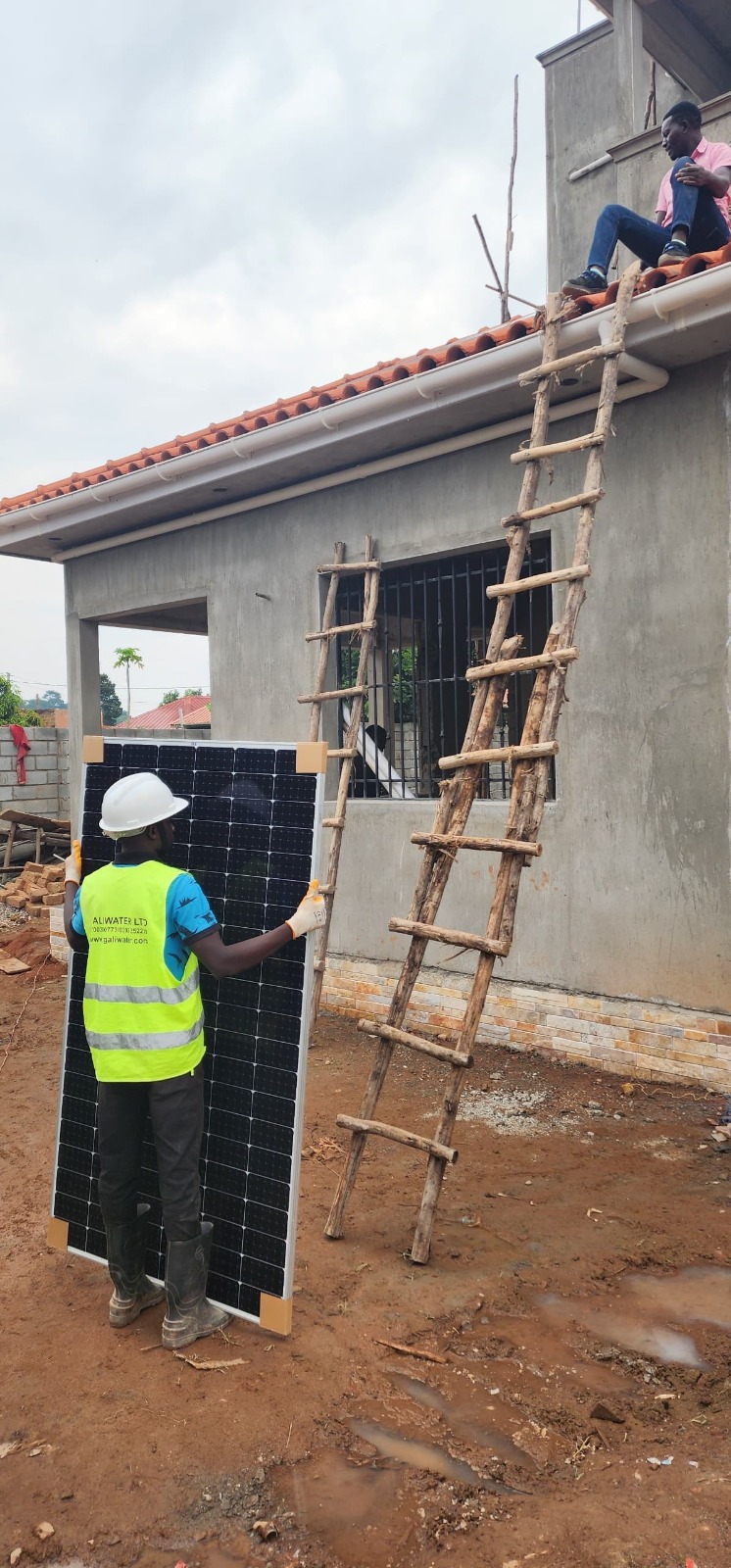
1.Solar Panels (PV Array)
Convert sunlight into DC electricity. Typically 4-12 panels depending on pump size.
2.Controller / Inverter
Regulates power from the panels and converts DC to AC if needed. Includes MPPT tracking for maximum efficiency.
3.Submersible Pump
Installed inside the borehole, draws water from the aquifer and pushes it to the surface.
4.Rising Main
The pipe that carries water from the pump at the bottom of the borehole to the surface.
5.Elevated Storage Tank
Stores water pumped during sunny hours for gravity distribution 24/7 — eliminating the need for batteries.
6.Distribution Network
Pipes and tap stands that deliver water from the tank to users by gravity.
6 Key Advantages of Solar Pumping
Zero Fuel Cost
Sunlight is free. Once installed, the system produces water at virtually no running cost.
80% Less Maintenance
No engine, no oil changes, no filters. Solar pumps have very few moving parts and last 15-20 years.
Payback in 2-3 Years
The higher upfront cost is recovered within 2-3 years through fuel and maintenance savings.
Silent Operation
No noise pollution — ideal for schools, hospitals, and residential areas.
Environmentally Clean
Zero carbon emissions, no fuel spills, no air pollution.
Reliable in Uganda
Uganda receives 5-6 peak sun hours per day, making it one of the best locations in the world for solar pumping.
Solar Pumping Costs in Uganda (2026)
Costs vary depending on borehole depth, required yield, and system size. Below are indicative ranges including panels, controller, pump, tank, and installation.
| System Type | Borehole Depth | Indicative Cost |
|---|---|---|
| Small Domestic (0.5-1.5 kW) | Up to 60m | UGX 12-20 million |
| Community / School (1.5-3 kW) | 60-100m | UGX 20-40 million |
| Commercial / Irrigation (3-7 kW) | 80-150m | UGX 40-75 million |
| Industrial (7-15 kW) | 100-200m | UGX 75-150 million |
Is Solar Right for Your Borehole?
Solar pumping is an excellent choice for the vast majority of boreholes in Uganda. To determine the best system for your situation, consider these four factors:
Your borehole depth and required yield (litres per hour)
Distance from the nearest grid power connection
Daily water demand and peak usage patterns
Available budget — solar has higher upfront cost but dramatically lower lifetime cost
Our team will conduct a full assessment of your site, water demand, and budget to recommend the optimal system — whether that is solar, grid, hybrid, or diesel.
Ready to Start Your Project?
Contact us for a free site assessment and detailed quotation.