HYDROGEOLOGICAL SURVEY

Find Water Before You Drill

Don't gamble on groundwater. Our VES geophysical surveys identify the best drilling locations.

98%Drilling Success Rate
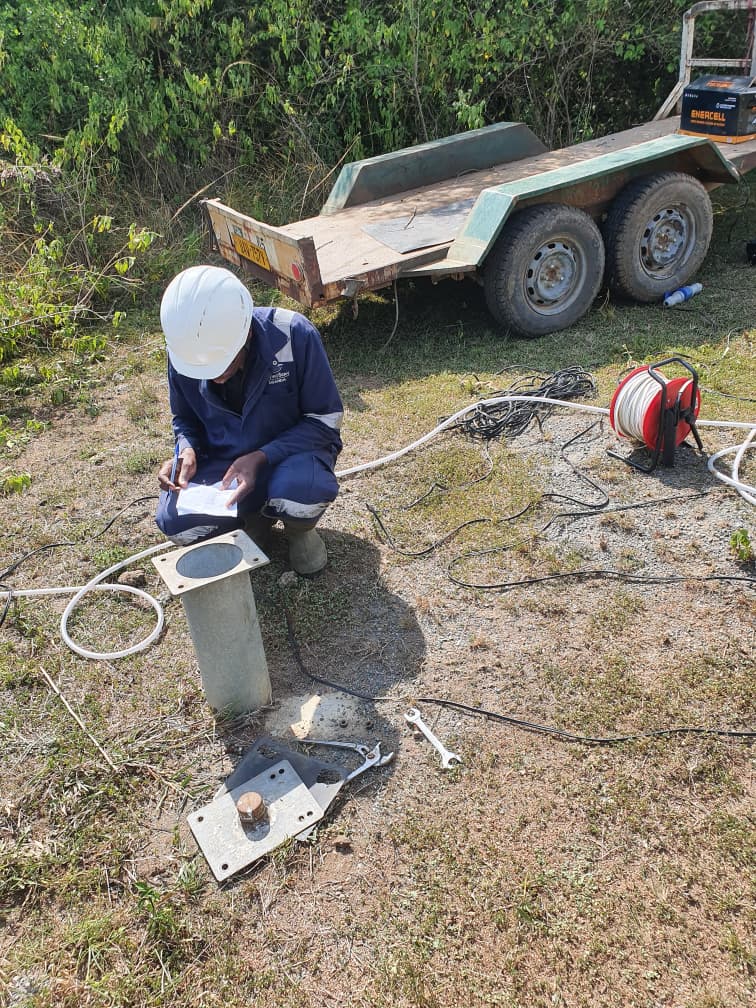
Clapson Aqua geophysical survey equipment and electrode array setup in the field
Overview

What Is a Hydrogeological Survey?

A hydrogeological survey is a systematic investigation of the groundwater conditions at a site. It combines multiple methods to identify the best location for a productive borehole.

Desk Study

Review of existing geological maps, national borehole database records, and regional hydrogeology reports for the area.

Field Reconnaissance

Site walkover to assess topography, drainage, rock outcrops, existing boreholes and wells, and land use.

Geophysical Survey

Measurement of subsurface electrical resistivity to detect fractures, weathered zones, and aquifer boundaries.

Data Interpretation

Analysis of field data to recommend drilling locations, predicted depths to water, and expected yields.
Our Method

Vertical Electrical Sounding (VES)

VES is the most widely used and cost-effective geophysical technique for groundwater exploration in Uganda. The method works by injecting a direct current into the ground through two current electrodes and measuring the resulting voltage difference between two potential electrodes.

As the electrode spacing is progressively increased, the measured apparent resistivity reflects the electrical properties of progressively deeper geological formations. The resulting sounding curve reveals:

  • Depth and thickness of each geological layer
  • Resistivity of each layer (correlating to loose soil, weathered rock, fractured rock, fresh hard rock, clay, or water-saturated zones)
  • The likely presence and depth of productive aquifer zones

Multiple VES stations are measured across the site. Our hydrogeologists use computer inversion software (IPI2win or equivalent) to interpret the VES data and produce:

  • Interpreted VES curves
  • Geoelectric cross-sections
  • Recommended borehole location(s) and drilling target depths
  • Predicted yield class (low/medium/high)
  • Recommended casing and screen programme
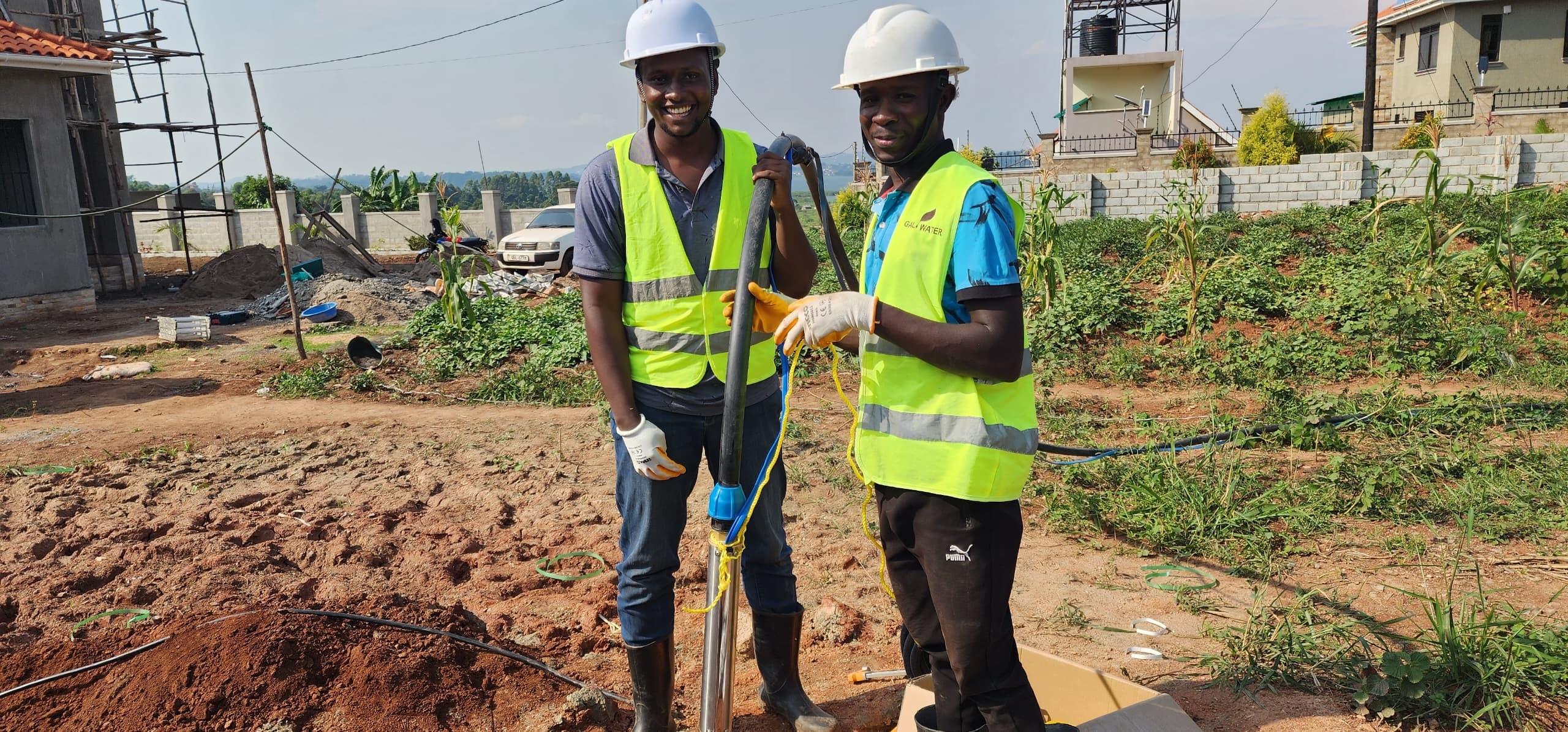
Clapson Aqua VES resistivity survey data interpretation and geoelectric cross-section
Uganda's Geology

3 Hydrogeological Provinces

Uganda's territory overlies three distinct hydrogeological provinces, each with different groundwater occurrence characteristics.

Clapson Aqua - Precambrian Crystalline Basement Complex

Precambrian Crystalline Basement Complex

Most of Uganda

Groundwater occurs in weathered/decomposed rock (regolith), fracture zones in fresh basement rock, and contacts between different rock types. Borehole depths typically 40–120m. Yields variable, 0.5 to 5+ m³/hr. Geophysical siting is critical — fractures are localised.

Clapson Aqua - Sedimentary Formations

Sedimentary Formations

Nile Basin, Lake Victoria Basin, Rift Valley

Groundwater occurs in alluvial gravels, sandstone aquifers, and rift valley sediments. Yields often high, 5–50+ m³/hr. Borehole depths variable. Less dependent on geophysical siting but aquifer mapping still adds value.

Clapson Aqua - Volcanic Formations

Volcanic Formations

SW Uganda — Virunga Highlands, Bufumbira

Groundwater in fractured and vesicular basalt and volcanic tuff. Can be highly productive but can also contain elevated fluoride and other volcanic mineral inputs. Careful siting and water quality assessment essential.

Clapson Aqua hydrogeological survey report and recommended drilling point on site map
What You Receive

Survey Deliverables

Upon completion of the survey, the client receives a comprehensive report including:

  1. 1Site description and desk study findings
  2. 2Field reconnaissance report
  3. 3VES field data sheets and interpreted curves
  4. 4Geoelectric cross-section map
  5. 5Recommended drilling point(s) clearly marked on a site map
  6. 6Predicted depth to water table and aquifer zones
  7. 7Recommended borehole design (total depth, casing depth, screen placement)
  8. 8Estimated probable yield classification
  9. 9Risk assessment of drilling success

Get Your Quote Today

Contact us for a free site assessment and detailed quotation.