Are you Ready for Clean Water Solutions Today? Contact Us
Safe, reliable groundwater access for every client. From new production boreholes to rehabilitation of failing ones.
A borehole is a narrow, deep vertical hole drilled into the ground to access underground water stored in aquifers — permeable rock, sand, or gravel formations that hold groundwater. A production borehole is lined with steel or PVC casing, fitted with stainless steel screens to filter out sediment, and equipped with a pump system to raise water to the surface.
In Uganda, productive boreholes typically range from 40 to 200+ metres deep depending on the local geology and depth of the water table. Areas with crystalline basement rocks (common in Central and Western Uganda) may require deeper drilling compared to sedimentary zones in the Nile Basin and Albert Rift areas.
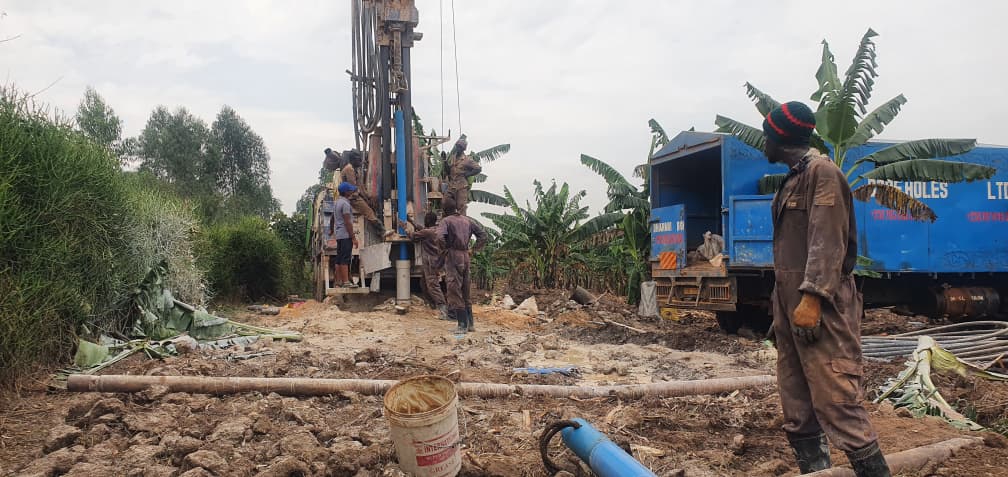
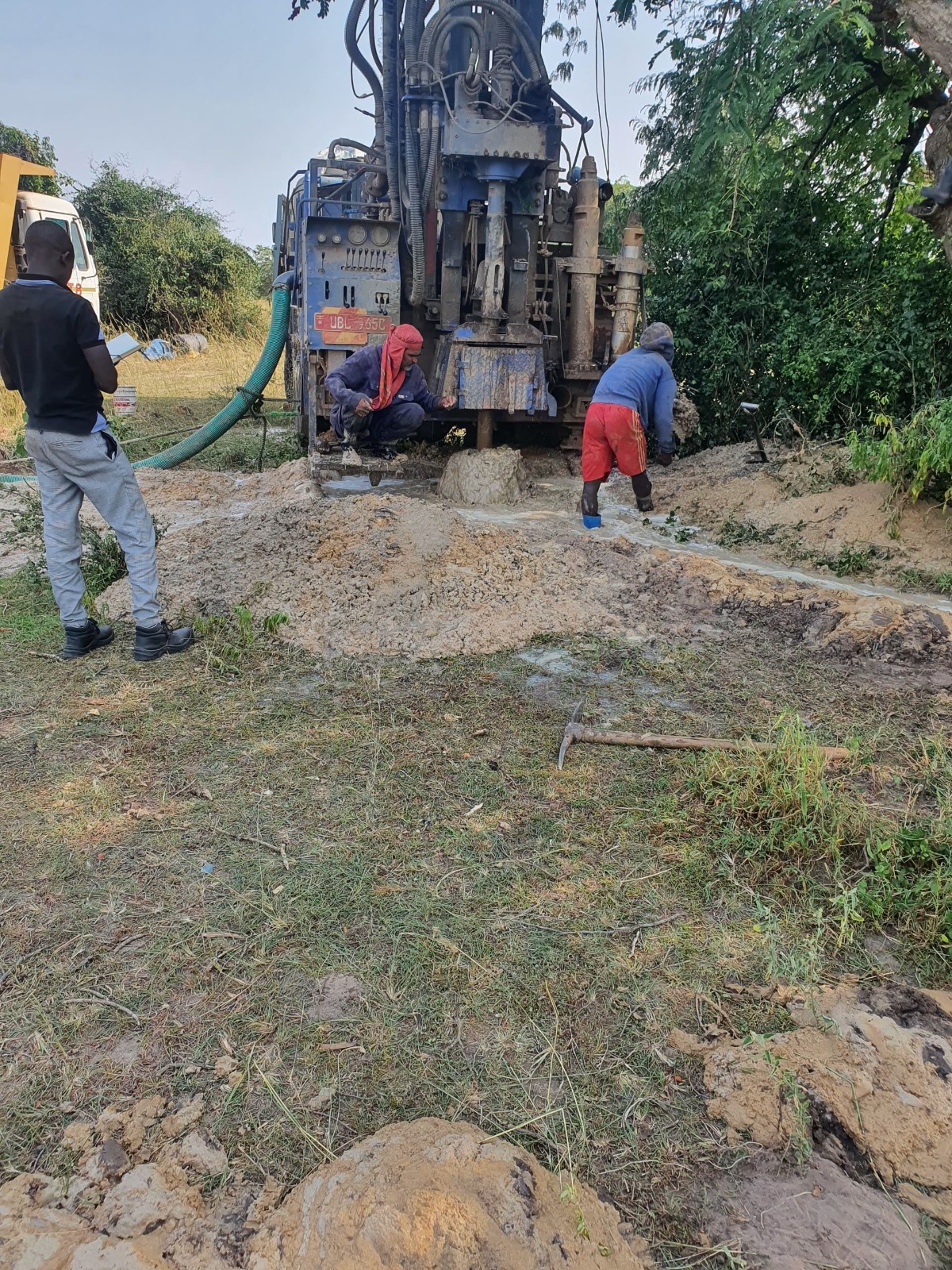
Every Clapson Aqua borehole follows a rigorous, standards-compliant process from survey to commissioning.
Our licensed hydrogeologists conduct a Vertical Electrical Sounding (VES) geophysical survey to map subsurface geology, identify fracture zones, and recommend the optimal drilling point. This dramatically increases the probability of striking water and reduces the risk of a dry borehole.

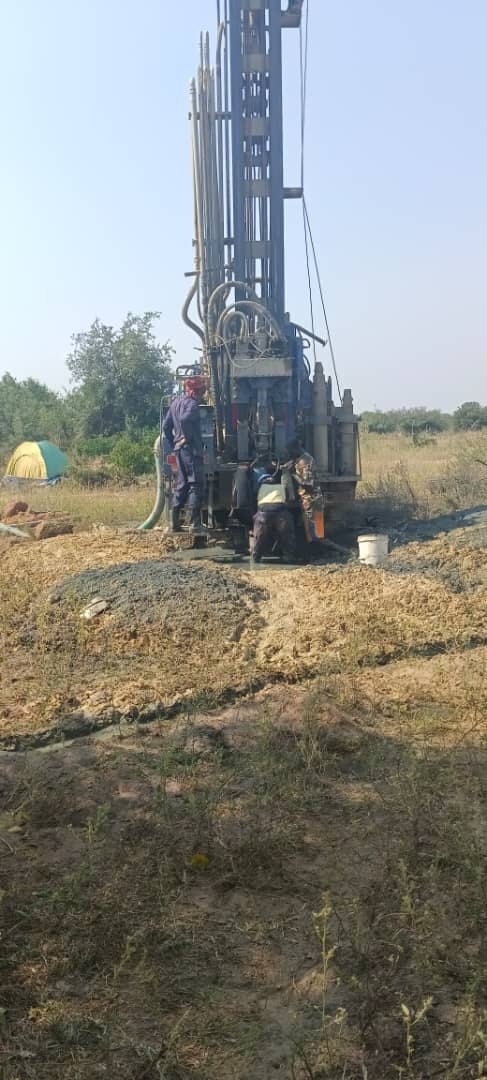
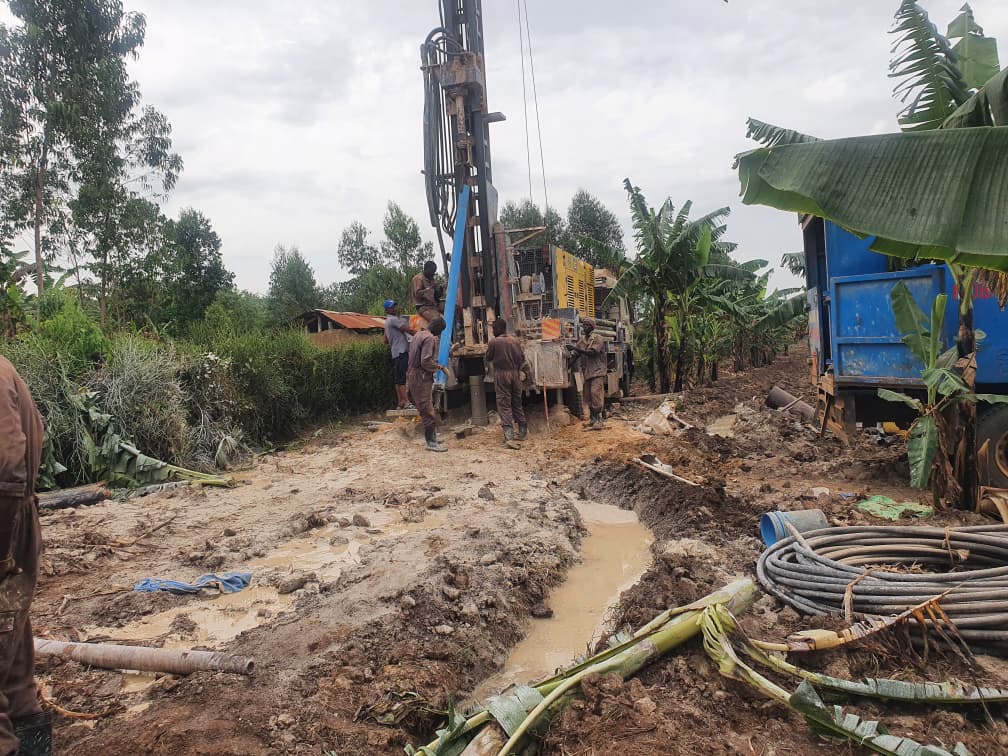
We mobilise our truck-mounted or crawler-mounted rotary drilling rig to site. A small sump pit is excavated for recycling drilling fluids, and the rig is positioned and levelled for safe operation.

We use rotary percussion and direct circulation drilling methods. The drill bit cuts through soil, weathered rock, and hard crystalline rock while drilling fluid removes cuttings. Geological formation samples are collected at regular intervals and logged by our hydrogeologist.

High-quality uPVC or steel casing is installed to support the borehole walls. Stainless steel wire-wound screens are positioned opposite aquifer zones to allow water entry while excluding sand and gravel. Gravel pack is placed around the screens for additional filtration.

The critical process of removing fine sediment from the aquifer adjacent to the borehole, maximising water yield and clarity. We use airlift, surging, and back-washing methods until the water runs clear and yield stabilises.

A constant-rate pumping test is conducted for a minimum of 6 hours (24+ hours for high-demand installations). Water level data is recorded to calculate transmissivity, storativity, safe sustainable yield, and recommended pump setting depth.

Water samples are collected and submitted to a certified laboratory for physico-chemical and bacteriological analysis. Results are used to design an appropriate water treatment system if required.

A submersible pump, rising main, control panel, and wellhead protection structure are installed and tested. The client receives a complete borehole completion report including drilling log, pumping test results, and water quality analysis.

Many boreholes in Uganda — particularly those drilled 10–30+ years ago — are no longer functioning optimally due to pump failure, silting, incrustation, casing collapse, or deteriorating water quality. Our rehabilitation process restores them to full productivity.

A submersible camera is lowered into the borehole to assess the internal condition of casing, screens, and the borehole wall.
Existing pump equipment is extracted for inspection and refurbishment or replacement.
High-pressure air or water is used to break up and remove incrustation and sediment from screens and the aquifer.
Where severe carbonate or iron incrustation is identified, controlled acid treatment dissolves deposits and restores screen slot conductivity.
A correctly sized, energy-efficient submersible pump is installed with new rising main and control panel.
Yield is verified against pre-rehabilitation baseline. In most cases, yield improves by 50–200%.
Independent, safe water supply not dependent on municipal connections or tanker deliveries.
Reliable water for drinking, sanitation, and school feeding programmes.
Safe water is non-negotiable for infection control and patient care.
Reduce operational costs and ensure supply continuity during city water outages.
Process water, cooling water, and employee welfare needs.
Livestock watering, irrigation, post-harvest washing, and agro-processing.
Community water supply schemes in rural and peri-urban areas.
Churches, mosques, and convents serving large congregations.
Borehole drilling costs in Uganda depend on several factors. Indicative price range: UGX 15,000,000 – UGX 45,000,000 for a complete domestic borehole equipped with a submersible pump. Contact us for a site-specific quote.
| Cost Factor | Impact on Price |
|---|---|
| Drilling depth | Deeper boreholes cost more per metre drilled |
| Geology | Hard crystalline rock requires more time and bit wear |
| Location | Remote areas attract mobilisation surcharges |
| Casing type | uPVC vs galvanised steel vs stainless steel |
| Pump type | Submersible electric vs solar vs hand pump |
| Civil works | Pump house, apron, fencing |

Contact us for a free site assessment and detailed quotation.